White House Presses AI Giants to Share Energy Dividends with Host Communities
New directives require data center operators to return excess power or financial value to local areas to mitigate rising utility costs and ease public resistance.
By Ken Adams ·
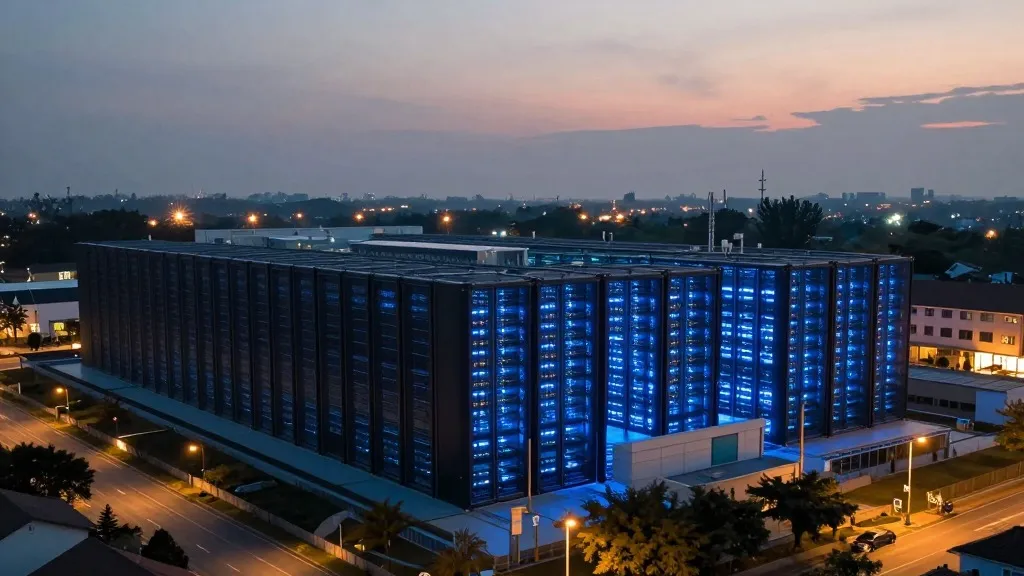
The White House has issued a new directive requiring artificial intelligence data center operators to provide energy dividends to the local communities that host their facilities. This move aims to counteract rising electricity prices and make large-scale computing infrastructure more acceptable to residents. The administration stated that these companies must not only generate their own electricity but also return or sell surplus power back to the local grid to prevent cost increases or potentially lower them.
The primary objective of this policy is to address widespread local opposition to AI data centers. Communities across the United States have frequently protested these facilities due to their significant impact on local resources. Residents have cited rising electricity bills, noise pollution, water shortages, and air quality concerns as major grievances. By mandating a flow of value back to the community, the administration hopes to make the presence of these centers more palatable and reduce friction between developers and local populations.
This directive builds on previous orders issued by the Trump Administration. Those earlier rules required data center builders to produce their own electricity rather than relying solely on the existing grid. The new mandate extends this logic by focusing on the utilization of excess generation. The goal is to ensure that the substantial energy produced by these facilities benefits the surrounding area directly, rather than being wasted or sold only at market rates.
A recently passed act further supports this framework by requiring data centers to cover the costs of necessary grid upgrades. This provision ensures that local taxpayers are not burdened with the financial costs of expanding infrastructure to support these high-energy facilities. By combining self-generation, excess power return, and infrastructure cost absorption, the administration is creating a multi-layered approach to managing the local impact of AI growth.
President Trump emphasized the economic opportunity in his announcement, noting that data centers which were previously unpopular in certain areas became highly popular once a financial deal was struck. He urged developers to "MAKE DEALS, and get them built!!!" The administration is keen to stay ahead of China in the global AI race, and winning back local favor is seen as a strategic step toward achieving that dominance. The practical implementation of these dividends remains to be seen, but the intent is to create a model where communities benefit directly from the infrastructure.
However, challenges remain beyond the economic aspect. While financial incentives and energy sharing address rising utility costs, they do not fully resolve other major complaints. Issues such as enormous water consumption, ecological damage, and pollution continue to make AI data centers a difficult sell in many locations. The "dividend" concept raises questions about corporate profitability, as companies typically pay such dividends only when they are profitable, which may not be the case for new builds that are still recouping construction costs.
The near-term power generation used by these centers is often gas-powered, which some critics argue is noisy and inefficient compared to conventional power plants. While this provides a source for excess energy, it may not be the ideal solution for all local environments. Longer-term generation methods are being developed but will take more time to come online. Whether these financial and energy mechanisms will be sufficient to win over skeptical communities is still an open question, as the economic benefit is only one facet of a broader set of environmental and social challenges.
Source: Tom's Hardware